Sharing the classical music experience

Patrick Scott's Substack explores the nexus between astrology & classical music.


Free, monthly 2.5 hour Spotify playlists curated by Patrick Scott.


Patrick's guide to cool classical concerts in Southern California.


Bold visual realizations acutely connected to music in new and archival recordings.


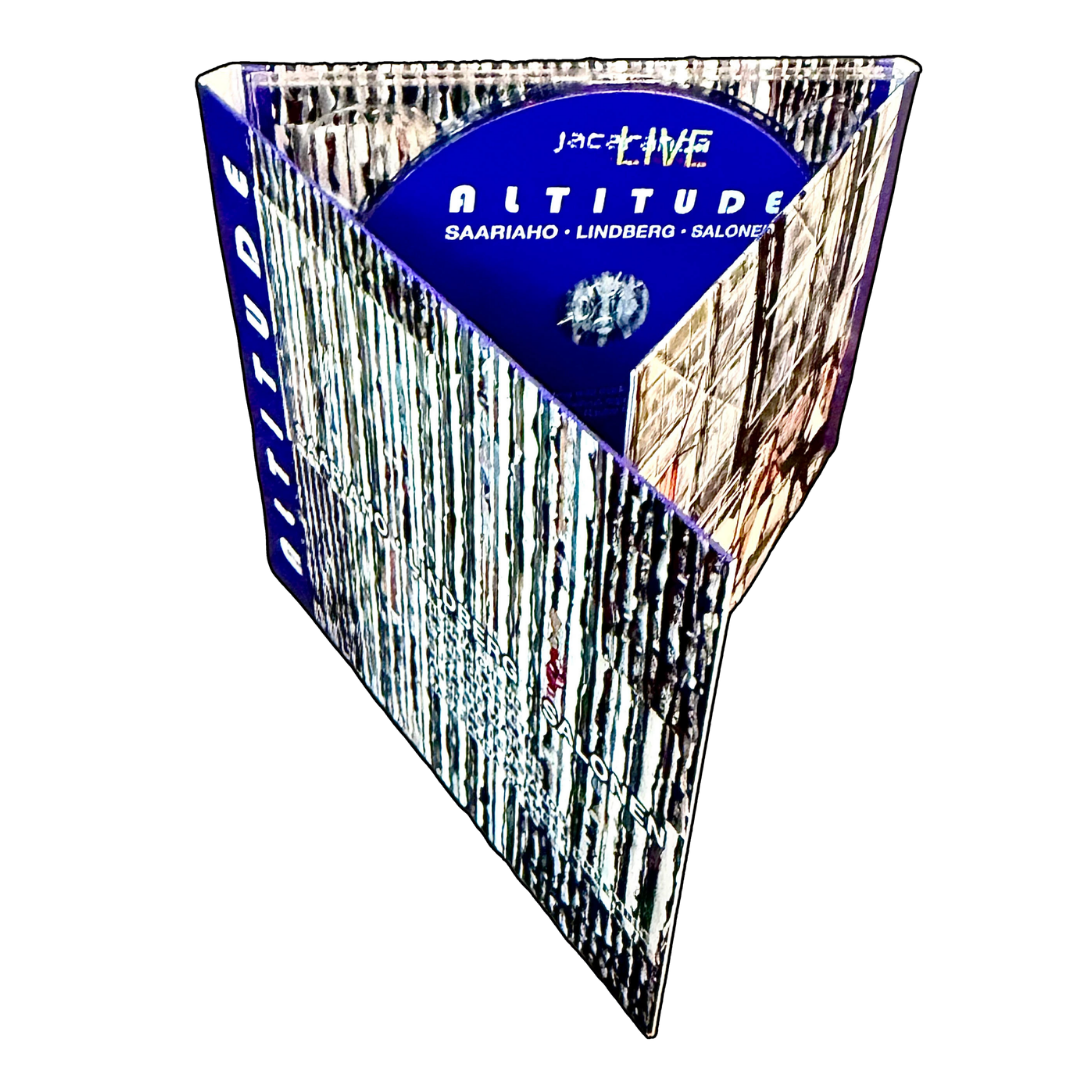
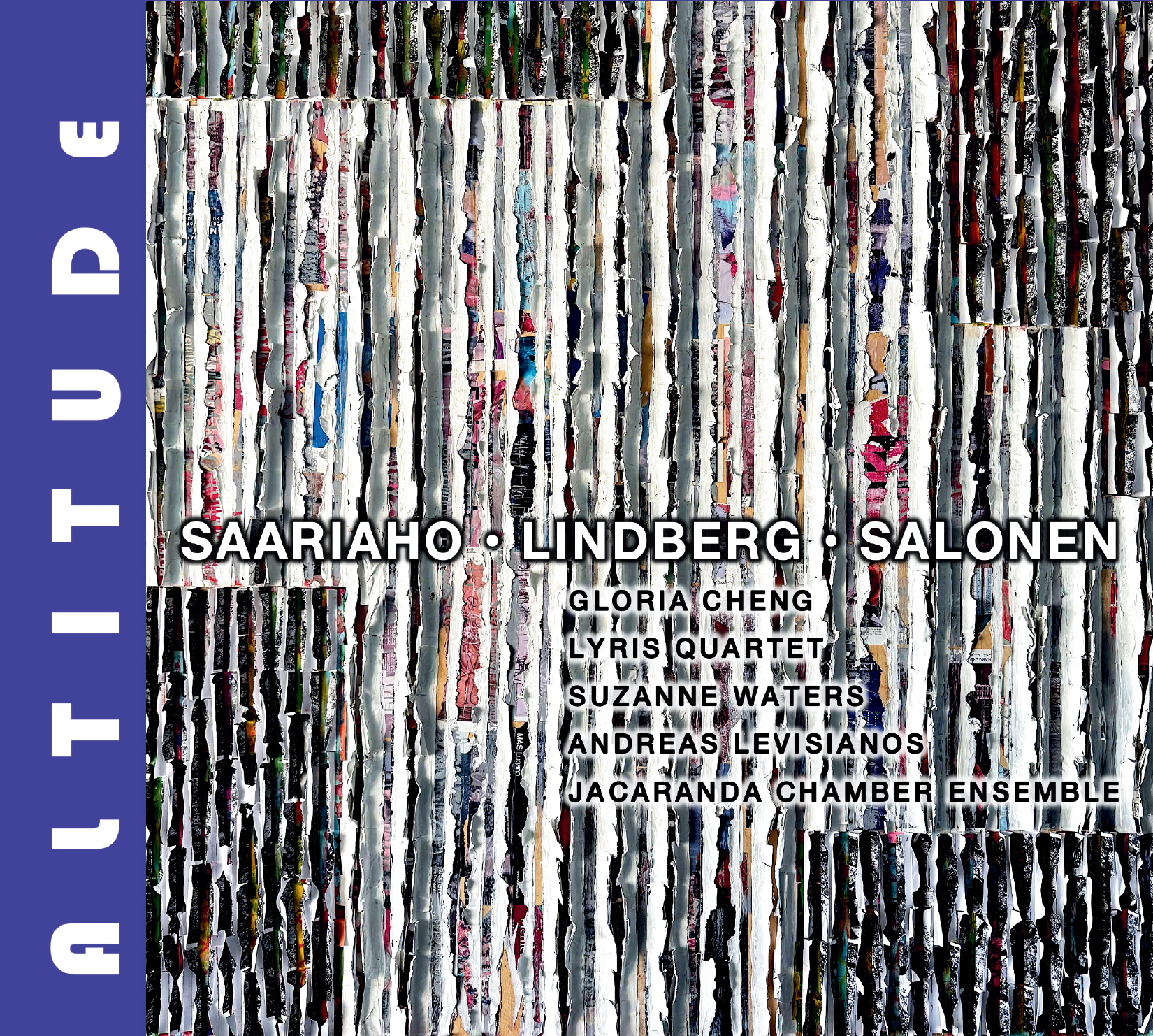
Our Record label featuring CD/digital recordings from Jacaranda’s vast concert archive.

CONCERT I

GLUCK, WEBER, BERLIOZ & BERWALD

Whether or not you observe the 40-day Christian Season of Lent starting with Ash Wednesday and ending Maundy Thursday before Easter Sunday, the idea translates into giving up something of value long enough to better see its importance in your life. For the Lenten season, I propose giving up listening to the so-called “greatest composer of all time” in order to see the world around Ludwig von Beethoven which is often obscured by hero worship. By offering a series of playlists “Without Ludwig”, my intention is to enrich our understanding of late 18th & early 19th century European music—to put Beethoven’s indisputable genius in a more inclusive and equitable context. Each playlist to follow will be in the format of a typical old-fashioned concert—overture, concertante work featuring a soloist, and symphony. Choral music concerts with orchestra will also be shared. We begin “OHNE LUDWIG” with one of the greatest overtures of all time. Richard Wagner expanded the orchestration of Christoph Willibald Gluck’s 1774 overture to Iphigénie en Aulide as an homage to Gluck, the “father of German music” (1714-1787). Carl Maria von Weber’s second piano concerto was inspired by Beethoven’s Emperor concerto. It was widely admired, then forgotten. Gluck was worshipped by Hector Berlioz as the “Jupiter of our Olympus” and his “musical father”. In defense of the shock produced by Berlioz’s dramatic scene Death of Cleopatra, he described it as a descendent of Gluck’s dramatic innovations and his hero’s ideal of “noble simplicity”. Franz Berwald (1796-1868) was artistically trapped in musically conservative Beethoven-obsessed Copenhagen. His innovative approach to advancing Beethoven’s symphonic argument was considered bizarre. Berwald heard only the first of his four symphonies during his lifetime. His 2nd, the extraordinary Sinfonie Capricieuse, composed in 1842, was finally premiered in 1914.

CONCERT II

WEBER, BERLIOZ, MAHLER & HINDEMITH

While Carl Maria von Weber handily competed in Vienna, Berlin, & London with his operas against Beethoven’s Fidelio, his concertos & symphonies often suffered by comparison. Weber was Constanze Mozart’s cousin in an enormously musical family. Mozart’s “swan song” clarinet concerto was written 2 months before his death in 1791. The instrument evolved 20 years later from the 5-keyed basset clarinet to 10—13 keys, allowing Weber to achieve an operatic level of virtuosity in his clarinet concertos. Weber recast a viola piece for the “clown of the orchestra” giving the bassoon an unmatched level of brilliance in the Hungarian style made popular by Haydn. After the wild success of his opera Die Freischütz, (50 times over 18-months in Berlin!)—with its sensational overture offered here—Weber’s famous lunch meeting with Beethoven thawed their previous chilliness. The older composer embraced him several times in the spa town of Baden October 5, 1823. Weber recounted that “the usually rough and repellent” composer served him “as carefully as though I were his lady”! On the subject of Freischütz, Beethoven praised Weber as “a devil of a fellow, a fine fellow.” These exchanges occurred with Beethoven’s conversation tablets, owing to his deafness at a time when he was finishing his 9th Symphony. Weber suddenly died at age 40 in 1826. He had travelled to London to conduct his opera Oberon, but his weak heart & lungs succumbed to tuberculosis. Nine months later Beethoven died in March of 1827. To comply with rigid French operatic taste, in 1841 Hector Berlioz orchestrated the spoken dialog of Freischütz & arranged a piano piece by Weber to become its ballet Invitation to the Dance. Weber’s unfinished opera Die Drei Pintos was completed by Gustav Mahler to marvelous effect in 1887. That opera’s entr’acte is joined here by a short overture from incidental music for Friedrich Schiller’s German adaptation of Carlo Gozzi’s play Turandot. Weber used an authentic Chinese tune that became the basis for Symphonic Metamorphosis on a Theme by Carl Maria von Weber by Paul Hindemith written while teaching at Yale in 1943.


CONCERT III

ROSSINI, HUMMEL & WEBER

Giacchino Rossini struck gold with his monumental opera seria Semiramide in 1823—concurrent with Beethoven’s Ninth Symphony & Missa Solemnis; both premiered in 1824. The prolific writer, civil libertarian, & philosopher Voltaire’s popular 1748 play Semiramis was adapted by librettist Gaetano Rossi for the opera house in Venice. Involving regicide, matricide & incest, Semiramide’s political intrigue was set in the ancient palace & hanging gardens of Babylon. Its miraculous overture established a new standard for orchestration until Berlioz’s Symphonie Fantastique transformed that skill in 1830. Rossini was lured to Paris by King Charles X receiving a massive salary, lifetime pension, & conditions to elevate him as the greatest operatic composer of the age. Oddly, Rossini & Beethoven aren’t often thought of as contemporaries. Beethoven’s unsuccessful middle-period Triple Concerto was first performed in 1808, after Hummel’s early-career Double Concerto (1805) dedicated to Count Razumovsky —Vienna’s arts patron & Russian ambassador famous for commissioning Beethoven’s Op. 59 string quartets. With dueling fan bases, Beethoven & Hummel were rivals as pianists. Hummel’s concerto greatly expanded the length & ambition of Haydn’s more classical Double Concerto from 1766—becoming a model for Chopin. Notoriously thin-skinned, Beethoven perceived a snub from Hummel over his C Major Mass, deemed a humiliating public failure. Their 20-year falling-out was reconciled on Beethoven’s deathbed; Hummel was among his pallbearers & played at his memorial. Weber’s 2nd Symphony compared very badly to Beethoven’s radical Eroica publicly premiered in 1805. Only two years after what had made the Eroica controversial, Weber’s last symphony was derided as too operatic & simple. Comparisons were also made to his very successful clarinet concertos to better dismiss the composer’s symphonic ambitions. Modern scholars now consider the short symphony a “miracle of miniaturist harmony” with proto-Romantic “dark-hued” colors. The symphony’s overall freshness & forward-looking wind parts more than balance its formal limitations.

CONCERT IV

BERLIOZ, HUMMEL & MOZART

Berlioz’s popular Roman Carnival Overture was recycled from the disaster of his opera Benvenuto Cellini at the Paris Opera in 1838. He saved its best music to make a stand-alone piece encored at its 1844 premiere. Berlioz’s rhythmic vitality encompassed the feeling of a kaleidoscopic street festival. The doleful English horn solo in its opening section was a novelty. Its haunting melody & the physical impact of its pulsing syncopations captured the audience’s rapt attention. Even today, the saltarello section stress-tests any orchestra’s brass & woodwind sections with its incredible speed & precision. Like Vienna’s Johann Nepomuk Hummel, Berlioz was obsessed with “noise” as orchestral color from the percussion section. He elevated the tambourine & indulged the European obsession with “Janissary music”—using the triangle & cymbal to startling effect. Championed by Franz Liszt, Hummel’s 1819 Piano Concerto No. 3 is his pinnacle achievement in that form. The work was widely admired for sustaining the formal rigor and drama of Mozart while amping up pianistic virtuosity. Hummel’s is the most grievously overshadowed concerto of the Romantic era. It opens mysteriously with tympani and dark pizzicato strings—nearly 4 minutes of turbulence eventually makes way for a limpid stream of pianism punctuated by tympani strokes. This orchestral mastery anticipates the beloved concertos of Schumann & Grieg. The horn section plays alone for 90 seconds to open the middle movement evoking the eloquent brass writing of Weber & Schubert to come. The piano enters virtually unaccompanied before subdued strings follow with more expressive brass to create an empyrean affect quite unlike any other middle movement of a piano concerto. Attacca tympani strokes boldly lift the curtain on Hummel’s final breathless romp. Mozart’s sublime Jupiter Symphony is hardly neglected, often eclipsing Beethoven as top audience favorite. In this context, however, it’s worth noting a final symphony (1788) with no ego struggles or political axes to grind and a message of timeless transcendence that elevates Jupiter to its well-deserved godly/ planetary status.


Fred Strickler Memorial Concert

August 24, 2025 - Zipper Hall